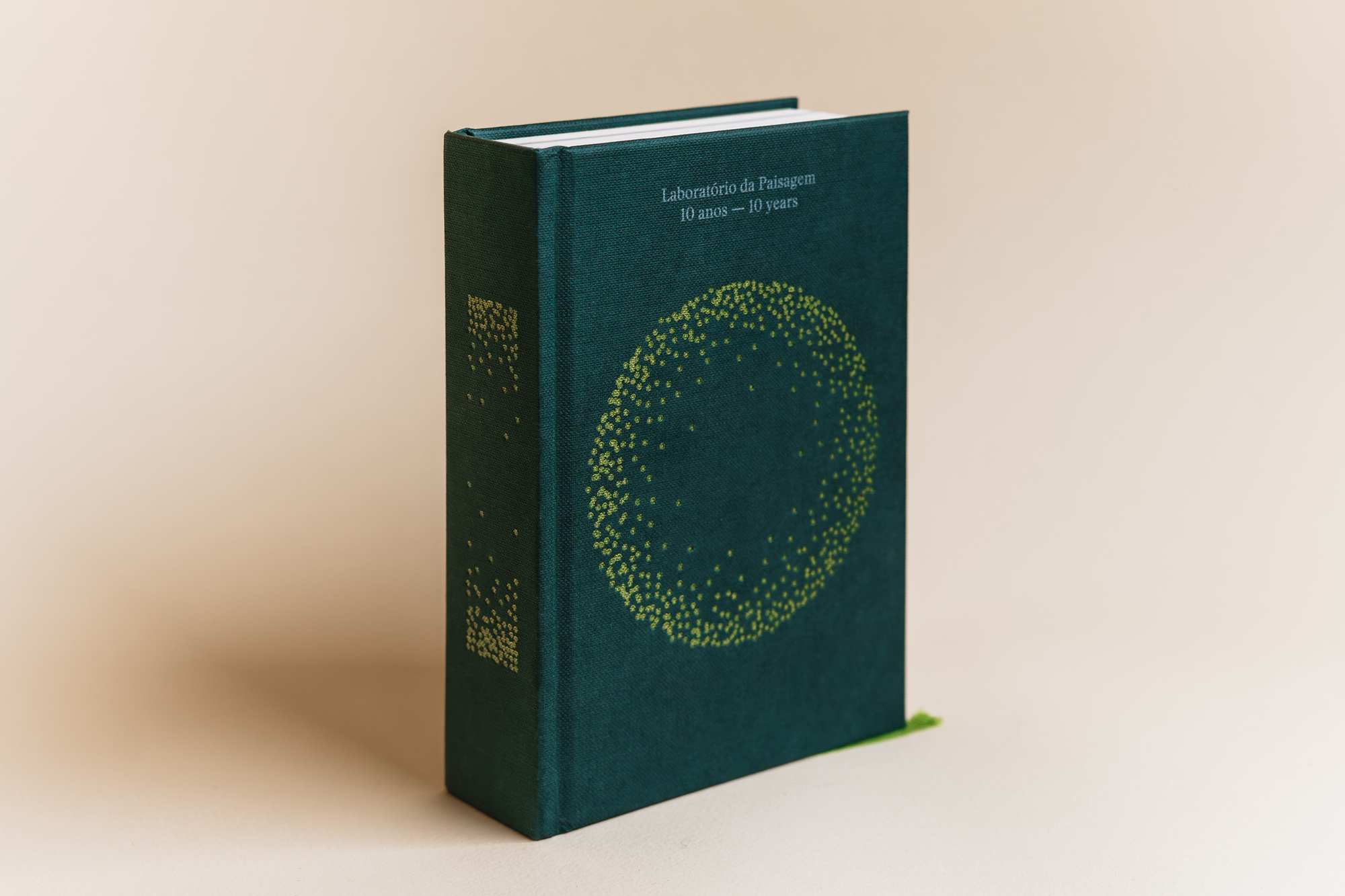
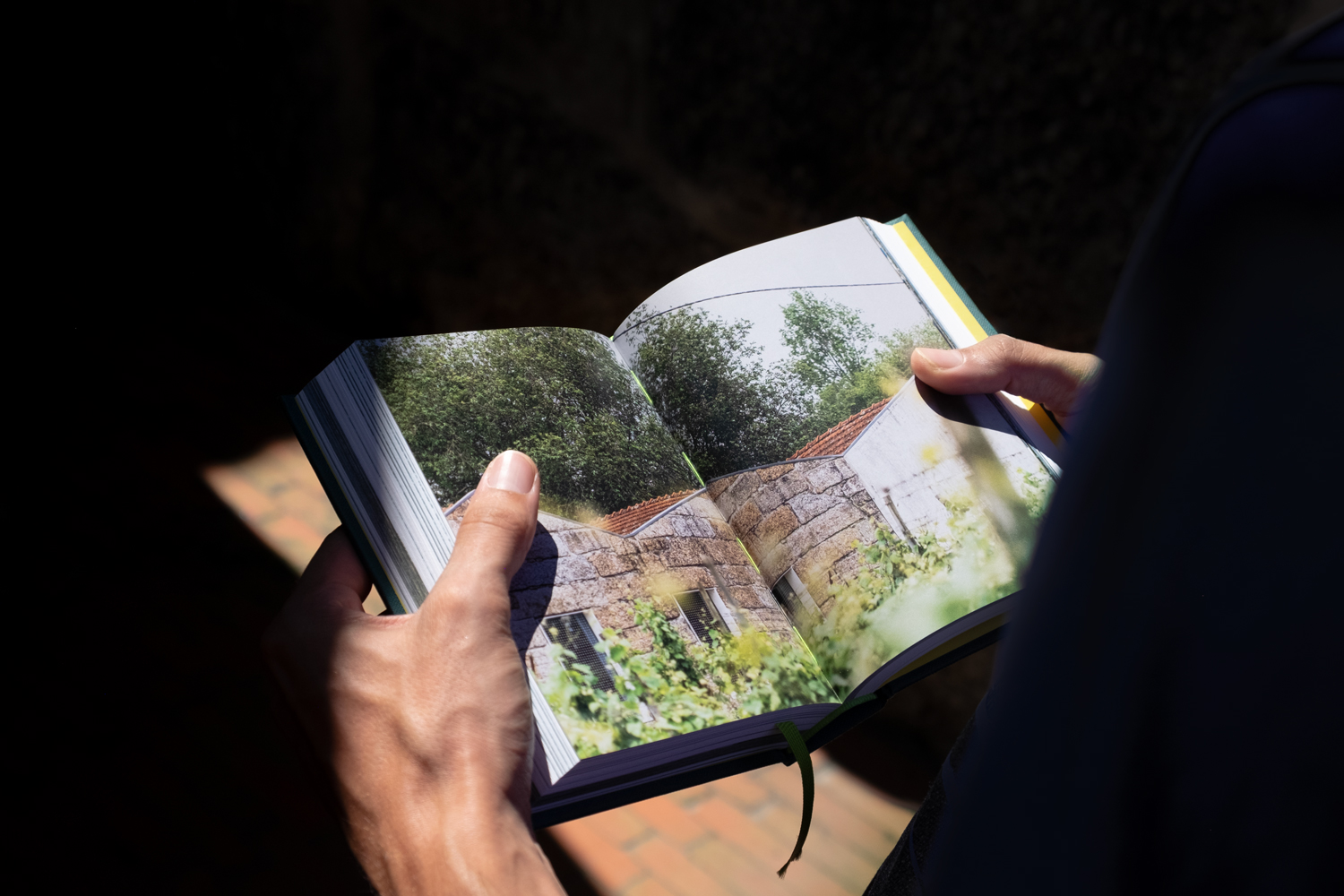
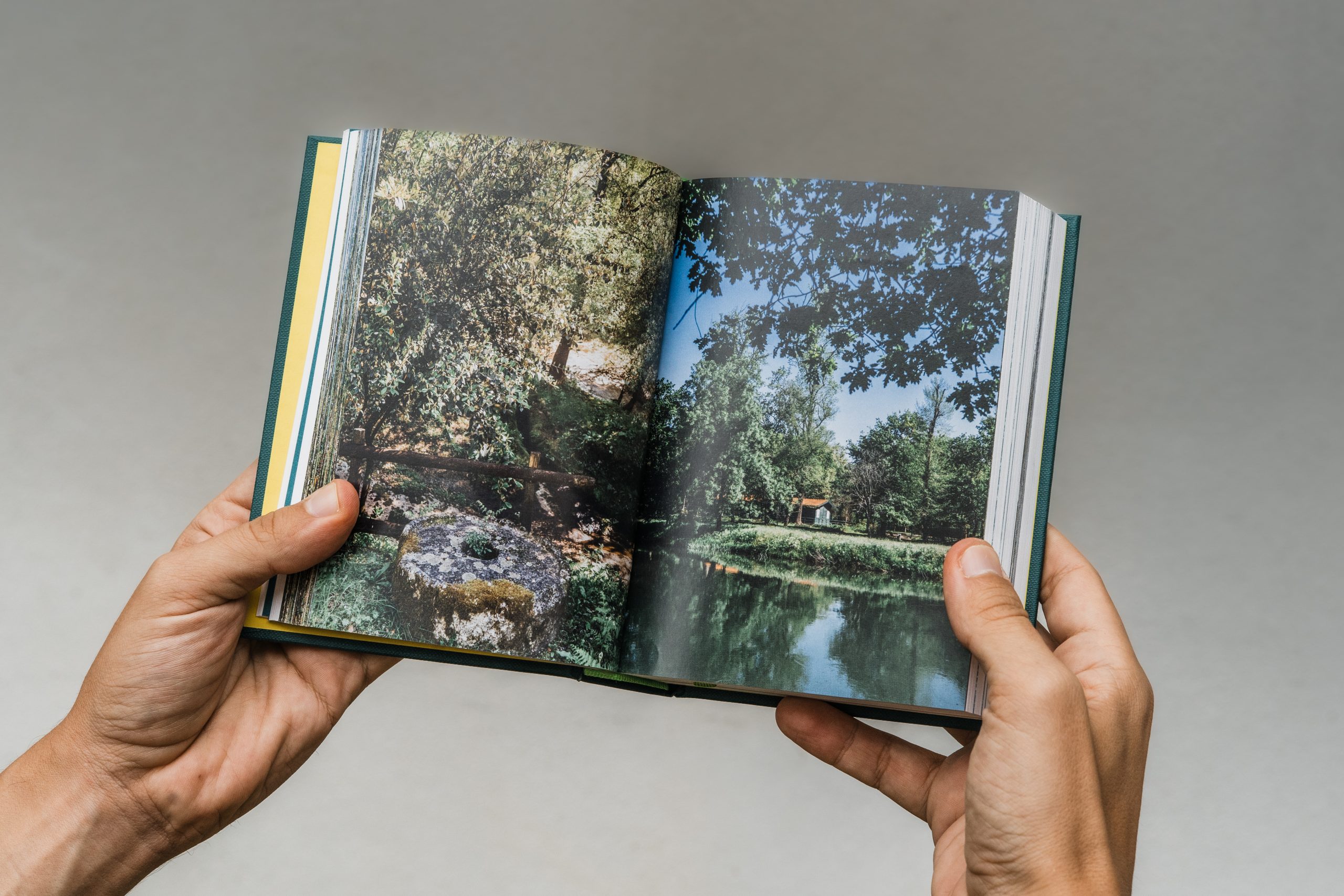
To mark the 10th anniversary of the Landscape Laboratory, we were commissioned to create a book that would highlight the institution’s strategic axes — the relationship between science and the community, the impact on the territory, and sustainability — while documenting its history, internal organization, and vision for the future. To highlight these two dimensions, two photographic chapters were added with images by Lais Pereira taken during various expeditions throughout the municipality of Guimarães. The first series presents a cross-sectional view of the Guimarães landscape, revealing less obvious places and adding new images to the visual imagery of the city. In the second part of the book, the images focus on the Laboratory building and its surroundings, such as the Selho River and the Creixomil meadow, punctuated by blank pages that symbolically leave space for what is yet to come.
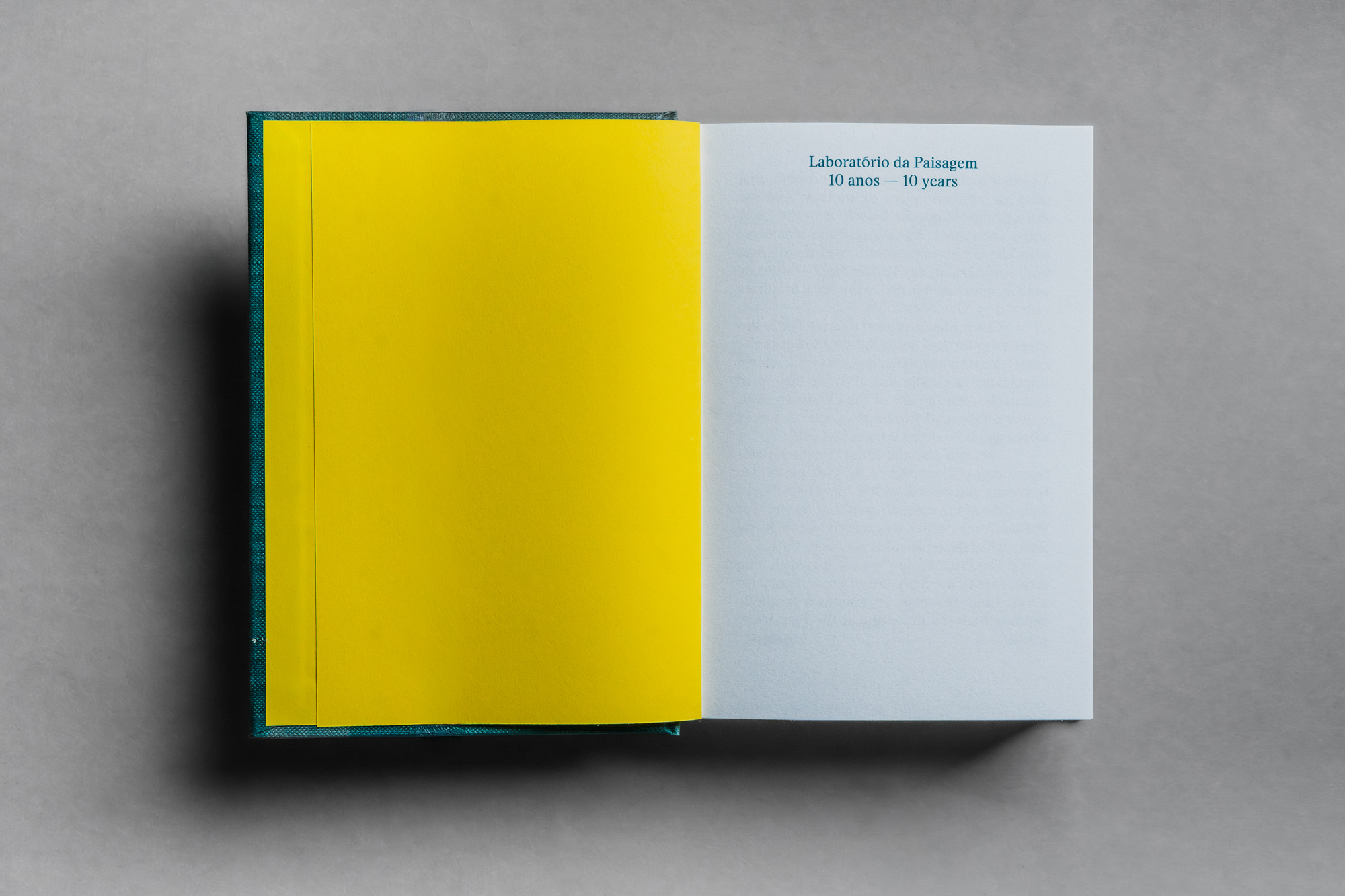
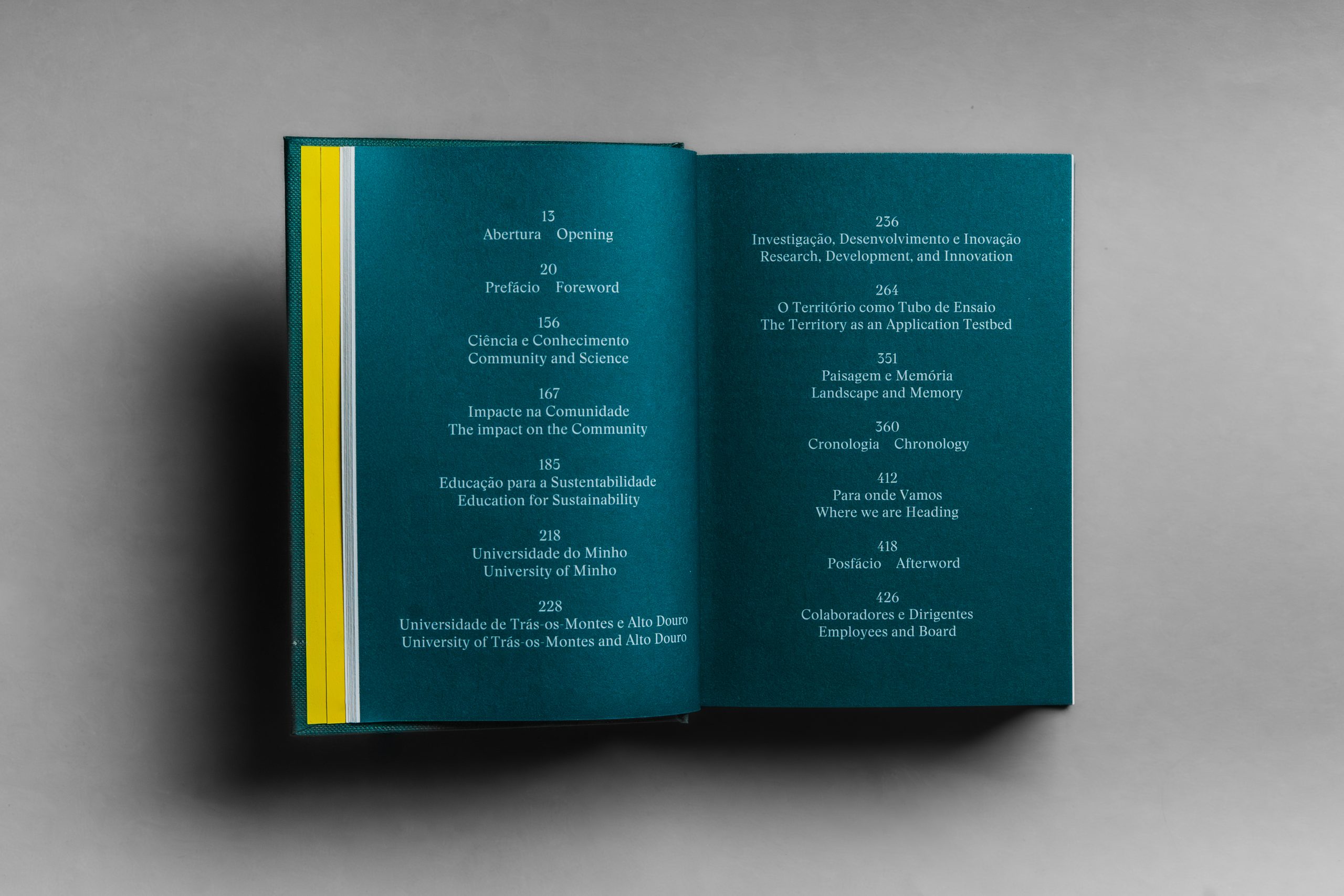
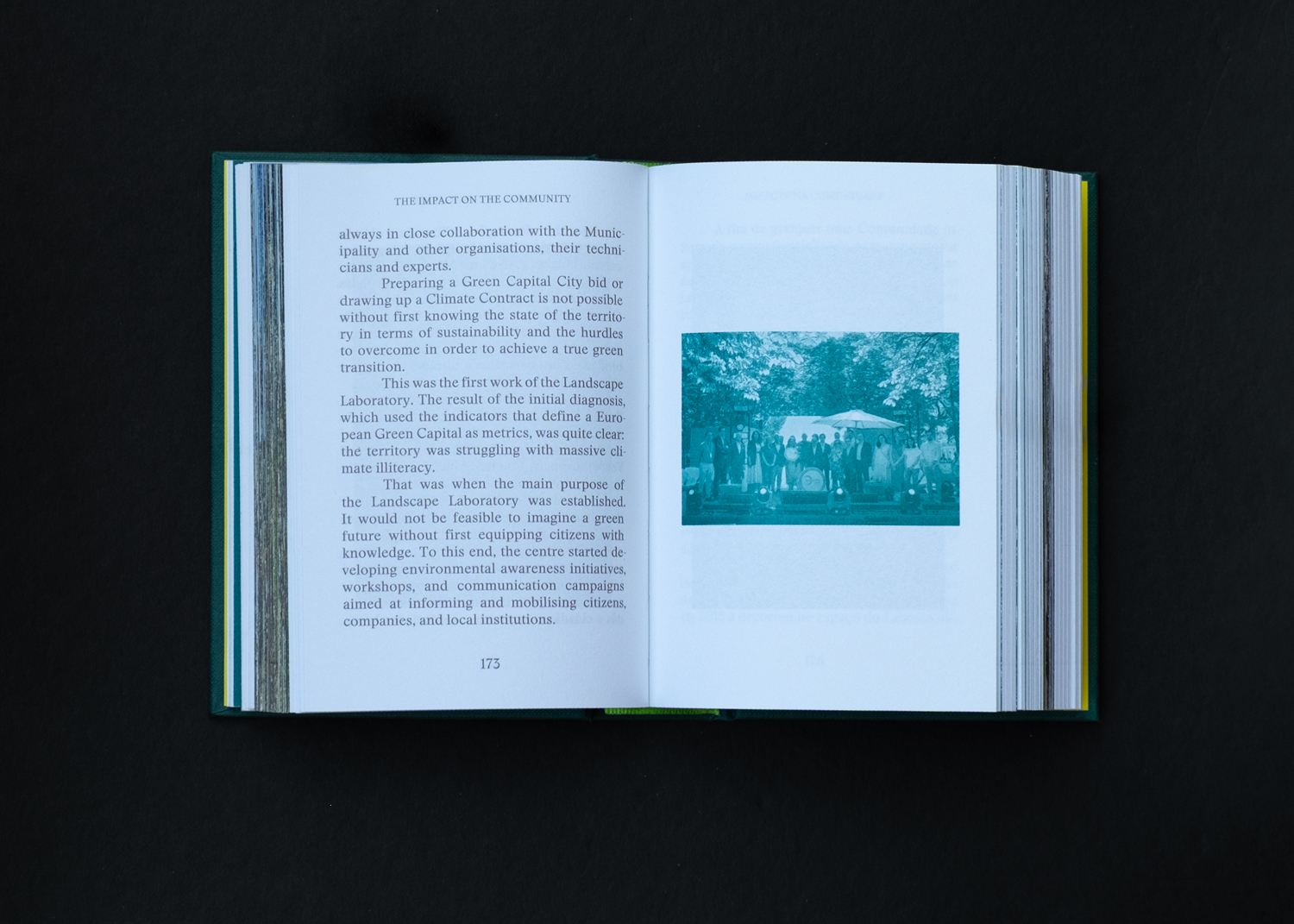
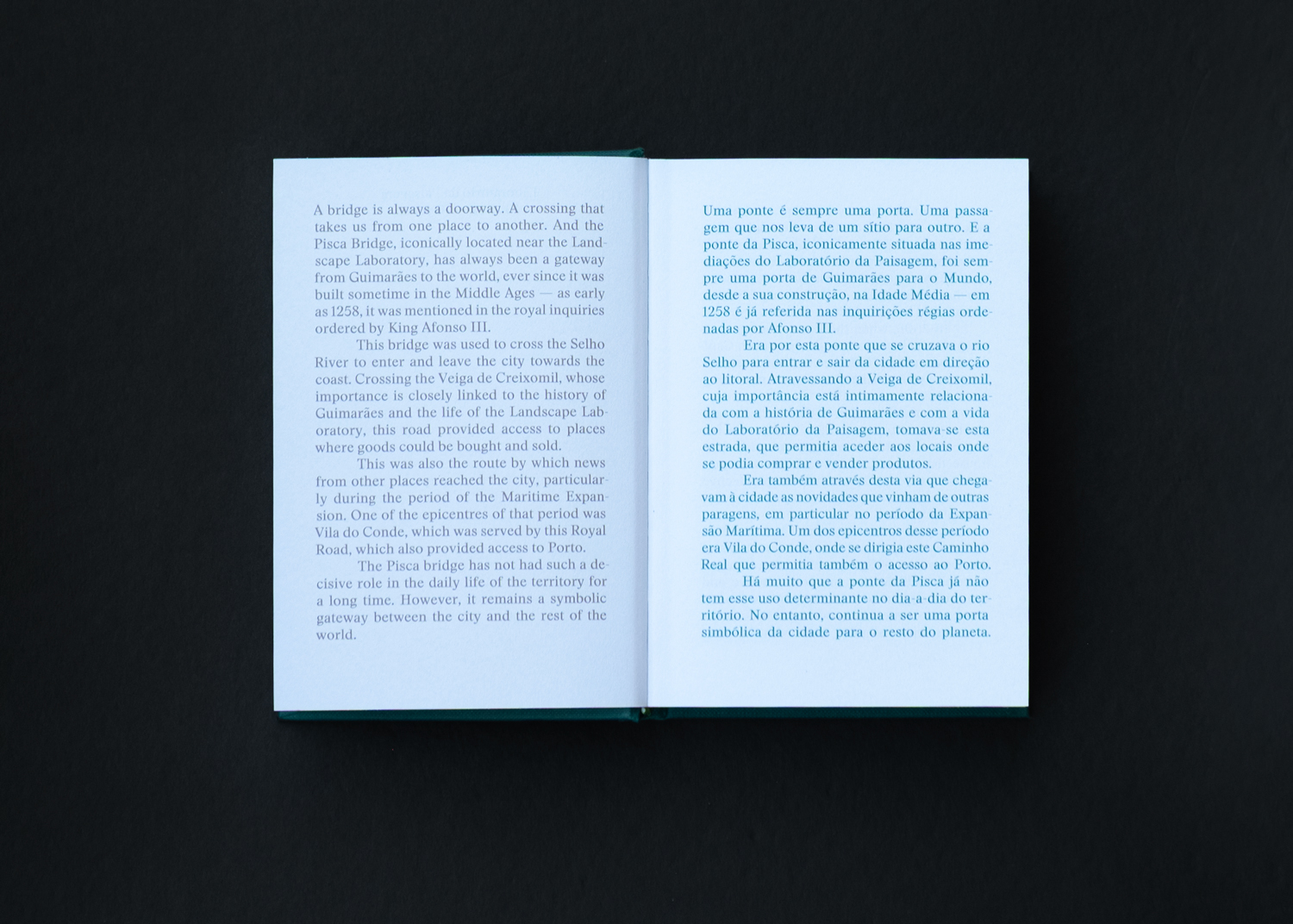
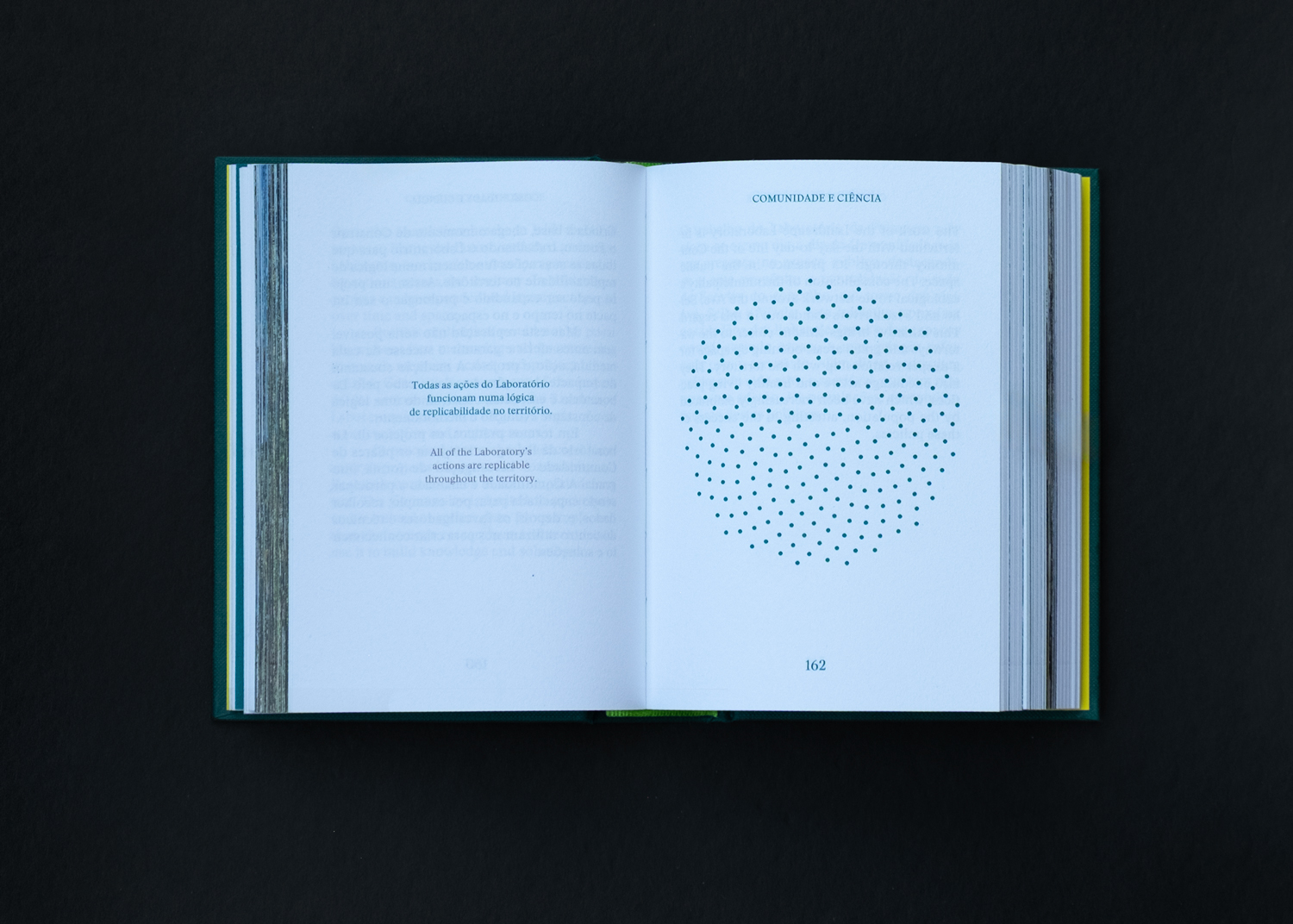
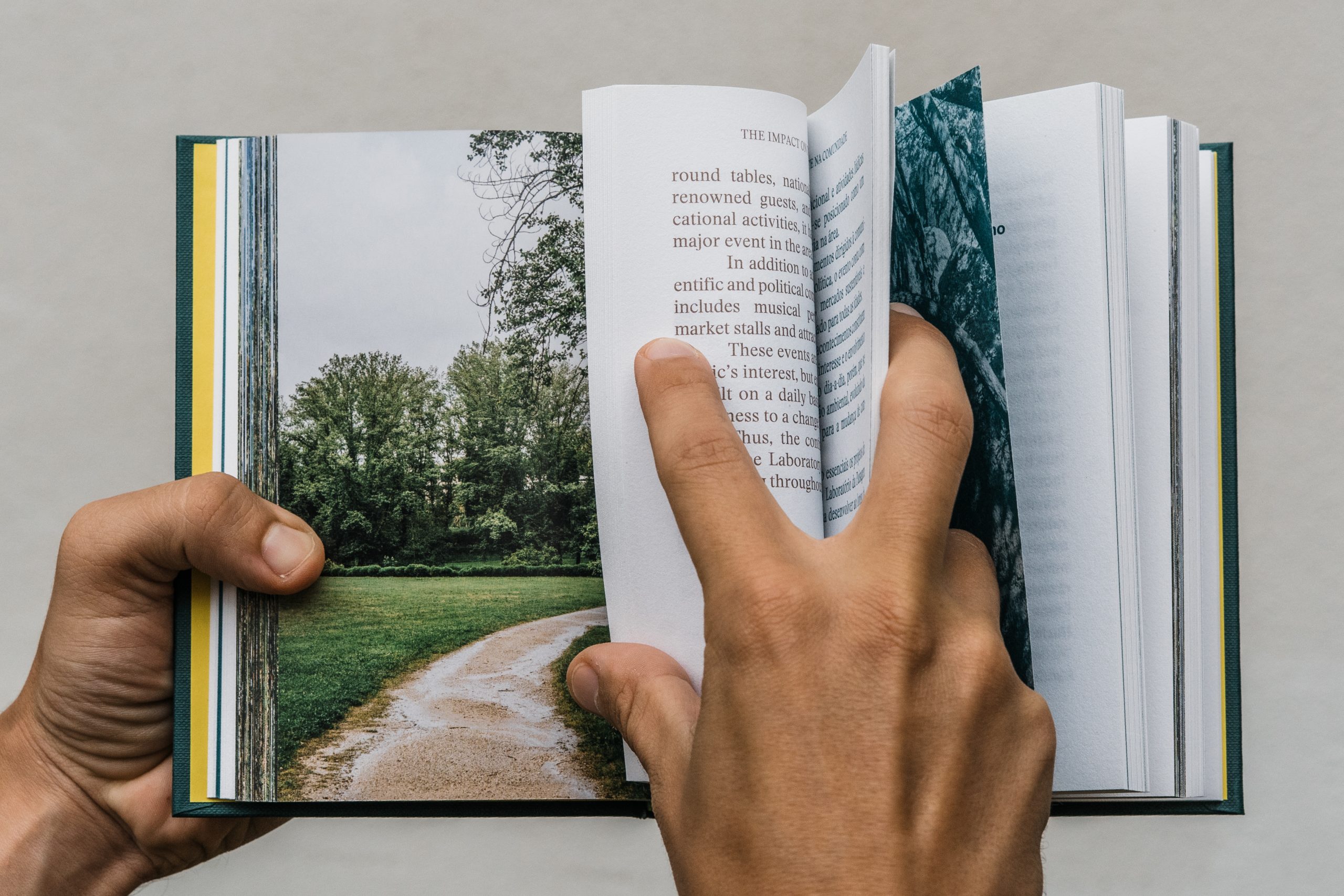
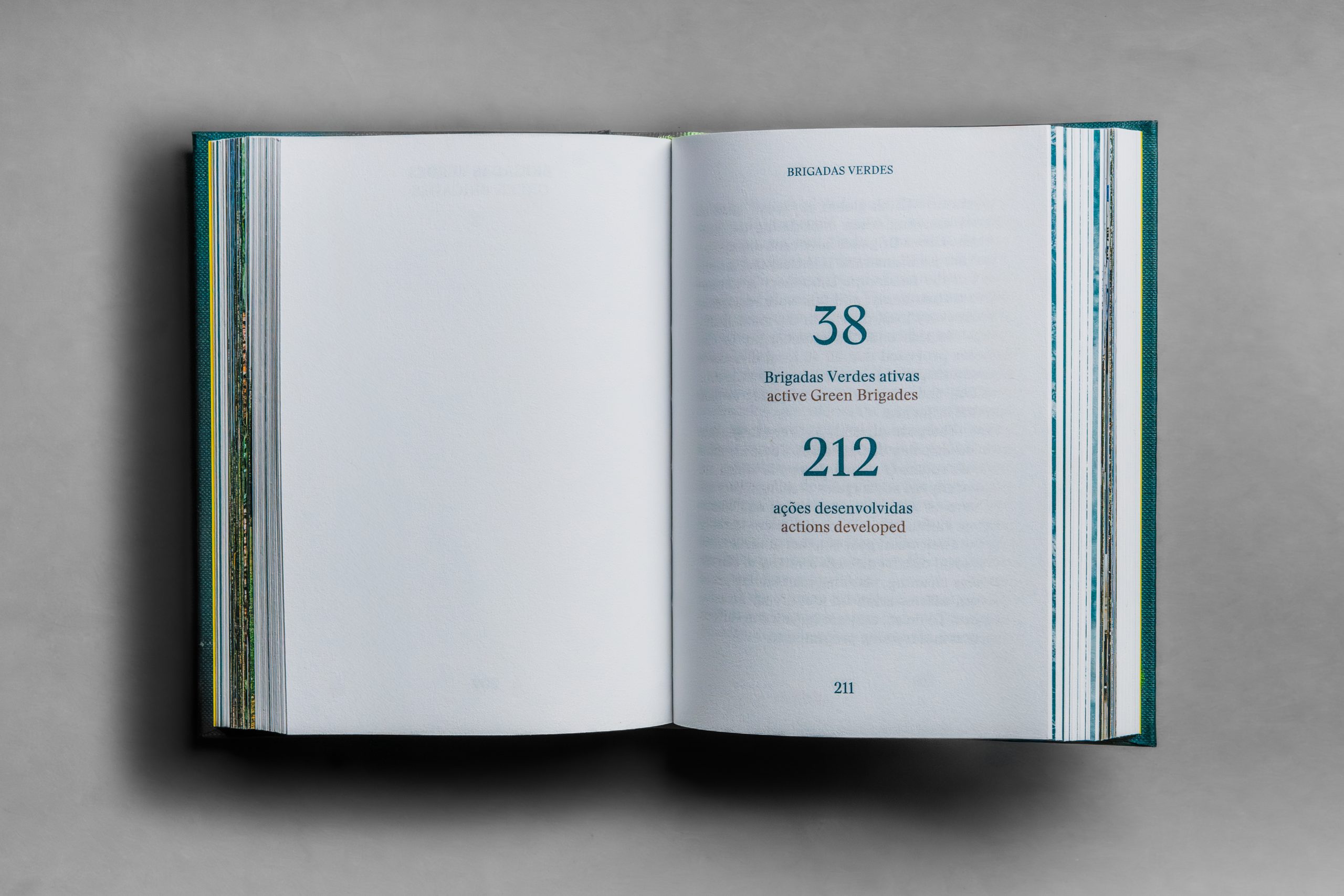
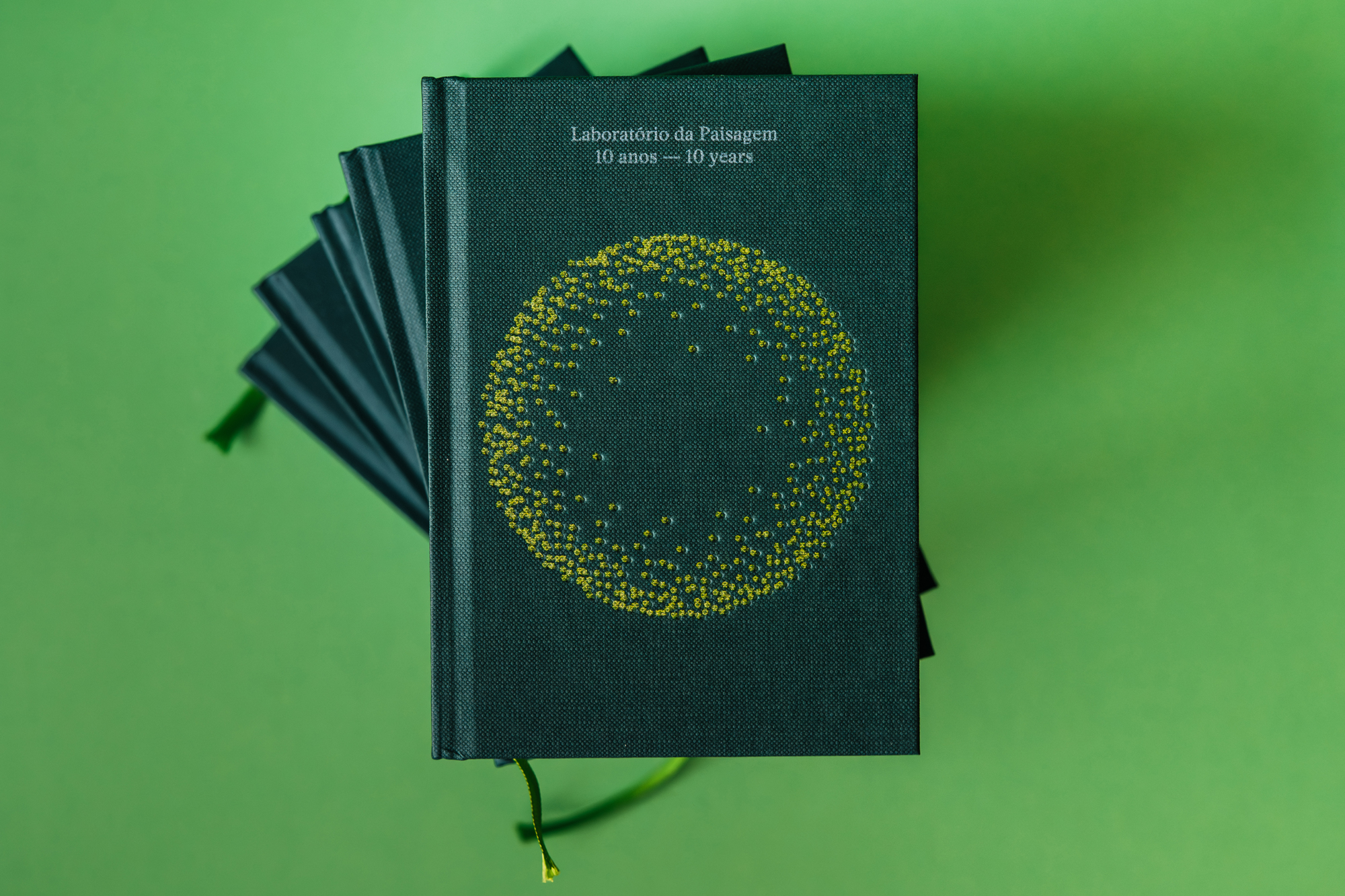
Graphically, the solutions we found were based on functionality and sustainability, in line with the Laboratory’s values. We opted for a small, easy-to-handle format that optimizes paper use and reduces waste. The paper used comes from responsibly managed forests. The hardcover binding allows the book to be opened fully and extends its durability. Inside, generous typography ensures comfortable reading, with graphic distinction for the author’s texts. The pagination follows an unconventional logic: the texts in English, in brown, occupy the left-hand pages, while the texts in Portuguese, in green, appear on the right — creating a total of 508 pages, although numbered only up to 431. Fluorescent green elements — such as the ribbon, stitching, and trim — contrast with the dark green of the cover, reinforcing the institution’s chromatic identity.
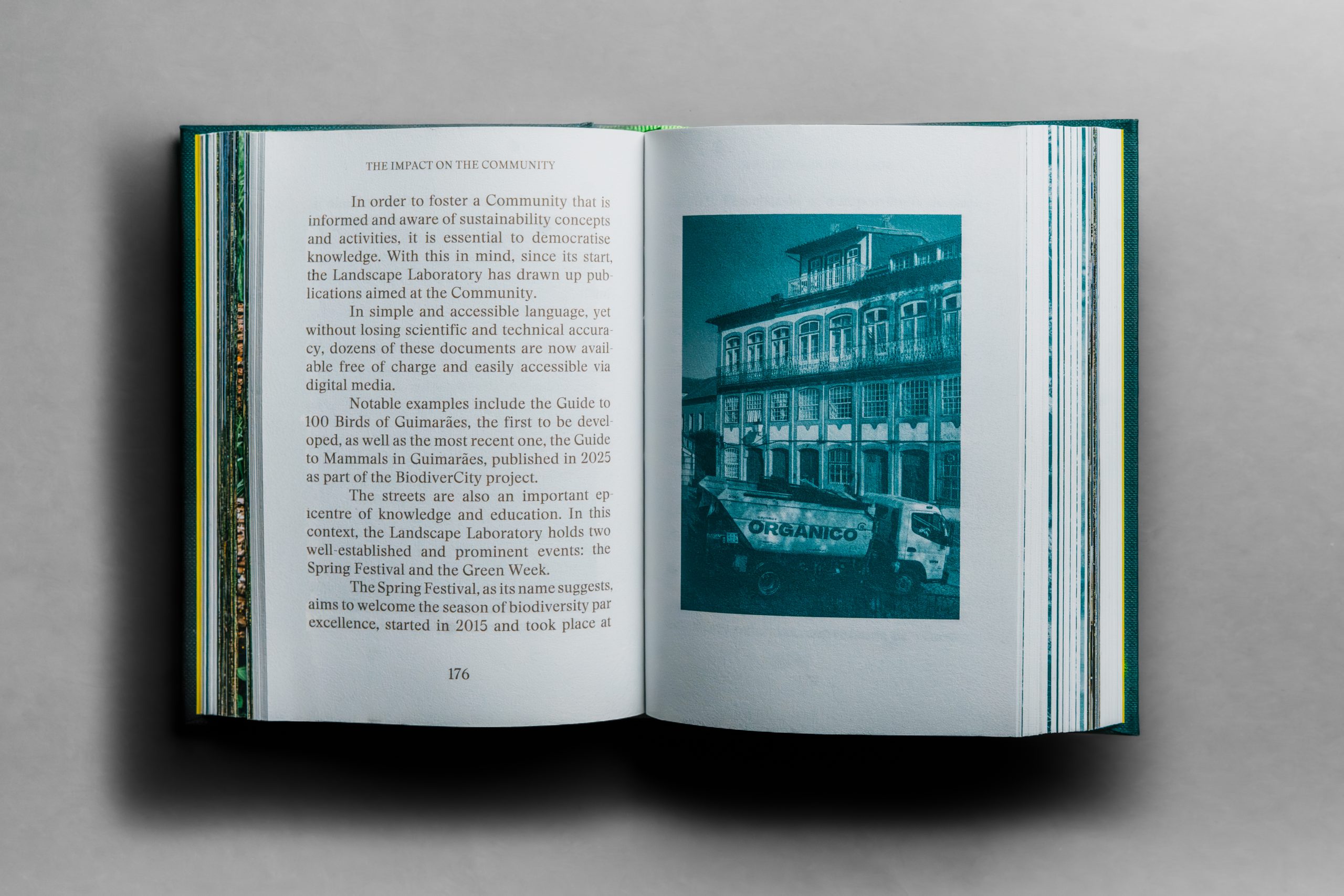
The result is a functional editorial object aligned with the principles of the Landscape Laboratory. The presence of photography — first as a reading of the territory, then as a record of institutional daily life — establishes a common thread that enriches and complements the understanding of the texts. The photographic chapters are printed on coated paper, allowing for greater definition of the color images, and the remaining sections, printed on matte paper, feature only text or images in one color, which made it possible to reduce the number of printing plates. This book is at once a celebratory document, a communication tool, and an editorial piece designed to last — and to accompany the next chapters of this story.